
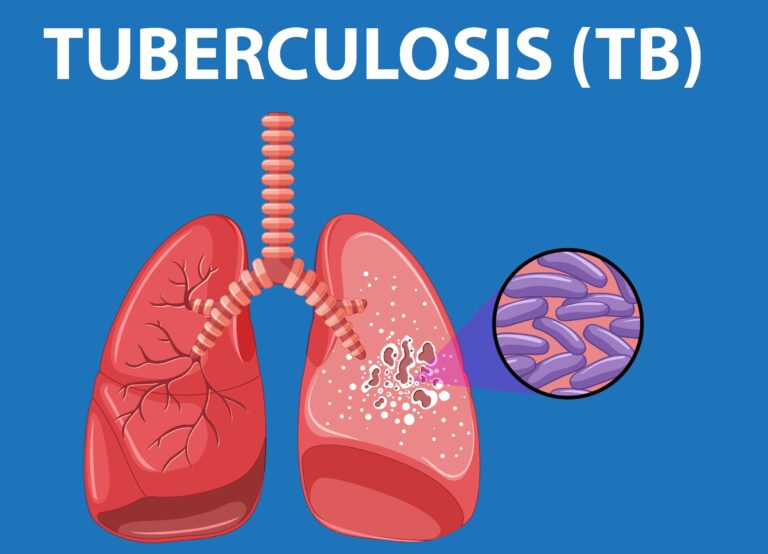
“Yes! We can End TB. Leadership belongs to the state, and power lies in communities.” This is the most accurate way to describe an effective response to TB today: political will, adequate financing, modern diagnostics, uninterrupted treatment, and stigma-free services. At the global level, the World TB Day campaign emphasizes: Yes! We can End TB! Led by countries. Powered by people.
Tuberculosis is not a “disease of the past.” According to the World Health Organization (WHO), in 2024, 10.7 million people fell ill with TB worldwide, and 1.23 million people died from the disease. Of all new cases, 6.1% were among people living with HIV. WHO also stresses that TB has once again become the leading cause of death from infectious diseases globally.
For people living with HIV, tuberculosis remains one of the most dangerous co-infections. According to WHO, in 2023there were an estimated 662,000 cases of HIV-associated TB worldwide, and 161,000 people living with HIV died from TB; this accounted for about one quarter of all AIDS-related deaths. That is why early HIV testing, timely initiation of ART, and rapid TB diagnosis should not be seen separately, but as parts of one integrated system of care.
Tuberculosis is transmitted through the air and most often affects the lungs, although it can also affect other organs. Active TB often presents with prolonged cough, fever, night sweats, weakness, chest pain, and weight loss. At the same time, in people living with HIV the course of the disease may be atypical, and the risk of progression from latent infection to active disease is higher; therefore, WHO recommends systematic symptom screening and rapid access to diagnostics for people living with HIV.
A modern response to TB is no longer limited to X-ray or microscopy alone. WHO emphasizes the importance of rapid molecular tests as the initial diagnostic tool for people with TB symptoms, and for people living with HIV — a combination of symptom screening, chest radiography, and subsequent microbiological confirmation. The faster the diagnosis is made, the earlier treatment begins and the lower the risk of further transmission.
Poland: TB remains a real problem, although the country is considered low-incidence
According to official data from the Institute of Tuberculosis and Lung Diseases of Poland, in 2024 there were 4,236 TB cases registered in the country, with an incidence rate of 11.3 per 100,000 population. Of these, 4,093 cases were pulmonary TB. There were 3,484 bacteriologically confirmed cases, meaning more than 82% of all registered cases. Mortality in Poland in 2023 was 483 deaths, or 1.3 per 100,000 population.
These figures matter for two reasons. First, they show that TB has not disappeared in Poland: every year, the country still records thousands of cases. Second, even in a country with relatively low overall incidence, there are groups for whom the risk and barriers to care remain disproportionately high — in particular, people living with HIV, people in detention settings, and some migrants and refugees.
The Polish TB Bulletin for 2024 states directly that TB/HIV co-occurrence in Poland remains relatively rare, but not insignificant: in 2024, TB was an AIDS-indicator disease in 20 people living with HIV. This is not a large number in absolute terms, but such cases are of particular clinical importance: they often indicate late HIV diagnosis, interrupted care, or insufficient coverage of prevention and screening.
At the same time, Polish HIV data show that the epidemic situation in the country is dynamic. According to a publication by the National Institute of Public Health and the National AIDS Centre, in 2022 there were 2,604 newly diagnosed HIV cases in Poland, of which 753 were among non-Polish citizens. Data for 2023, published in the abstract of a more recent scientific paper, indicate 2,404 new HIV diagnoses, including 612 among non-Polish citizens. This means that the migration component in Poland’s HIV response has long ceased to be a peripheral issue.
Migrants in Poland: where HIV and TB risks intersect
Separately, the Polish TB Bulletin shows that in 2024, among people diagnosed with TB in Poland, there were 376 foreigners, accounting for 8.9% of all cases. The largest group were people from Ukraine — 229 individuals; overall, TB cases among foreigners were linked to people from 34 countries. For the Polish system, this means a practical need not only for clinical care, but also for translation, system navigation, continuity of treatment across countries, and work to reduce stigma.
At the same time, in publicly available annual sources, Poland reports TB data for foreigners separately and HIV data for non-Polish citizens separately, but does not provide, in the same format, a separate indicator specifically for HIV/TB co-infection among migrants. This does not mean the problem does not exist; it means that a targeted response still requires better, more detailed data. And it is precisely this need for better disaggregated data on TB among refugees and migrants that WHO emphasizes in its special 2024 report.
European data confirm that migration cannot be reduced to the idea of an “imported disease” — the situation is far more complex. The ECDC notes that in 2023, migrants accounted for 47.9% of all new HIV diagnoses in the EU/EEA, and some infections may have occurred after migration. For TB, WHO emphasizes different but related risk mechanisms: legal barriers, poverty, overcrowded housing, unstable access to healthcare, language difficulties, stigma, and interrupted treatment. Therefore, a migrant-oriented response to HIV and TB is not an “additional option,” but part of a modern public health system.
Poland as an example: not only a challenge, but also a solution
In response to the needs of refugees from Ukraine, Poland, with the support of WHO and partners, has begun shifting its TB care model in a more patient-centred direction. WHO describes that in Poland, TB treatment is free of charge for citizens and refugees, and that the model being introduced includes more outpatient and home-based care, video-supported treatment, better coordination between institutions, and reduced stigma associated with prolonged hospitalization. This is especially important for mobile populations, people with chronic conditions, and those who simultaneously need HIV-related services.
It is precisely this approach — people-centred care — that is now considered the key to success. In the WHO 2024 report on TB among refugees and migrants, it is emphasized that effective programmes must be stigma-free, culturally sensitive, migrant-friendly, supported by interpretation services, community support, flexible screening and treatment pathways, and reliable intersectoral coordination. For people living with HIV, this also means integrating services: testing, ART, TB screening, TB preventive treatment, case management, and social support within a single pathway, rather than across several fragmented systems.
What this means in practice — for communities, services, and communication
On World Tuberculosis Day, it is important to speak not only about statistics, but also about action. For the general population, the key message is simple: TB is curable, and early care saves lives. If there is a prolonged cough, fever, night sweats, weakness, chest pain, or unexplained weight loss — it is not worth waiting. For people living with HIV, this message is even more important: regular contact with healthcare services, TB screening, and uninterrupted ART reduce the risk of severe disease.
For services in Poland and for organizations working with migrants (such as the HelpNowHUB Foundation), the main conclusion is different: HIV and TB need to be integrated at the level of the patient pathway. A person should not have to search separately for information, separately for an interpreter, separately for testing, separately for a referral, and separately for social support. The simpler and more humane the entry into the system, the greater the chance that the diagnosis will be made early and treatment will be completed. This is exactly what the “Led by countries. Powered by people.” approach requires. And the HelpNowHUB Foundation fully supports it!
***
This publication was prepared by Fundacją HelpNow HUBwithin the framework of the project “From heart to heart” in partnership with Step by Step Fundacja, in partnership with Fundacja Res Humanae, with financial support from the Elton John AIDS Foundation.